What Is the Most Reliable FX Trading Platform? Here’s What Traders Actually Look For

The sheer number of FX trading options can feel overwhelming, but when you strip away the marketing fluff, the requirements for an effective trading platform are actually quite straightforward.
In this guide, we will walk you through what you should demand from your FX platform. We will look at the technical requirements, the safety features, and the practical tools that help you navigate the markets.
Key Takeaways
- A trading platform is the software interface used for analysis, while a broker is the financial institution that executes trades and holds your funds.
- Integrated solutions like FXTRADING.com combine both roles, offering a more streamlined experience with a single login for both analysis and execution.
- Reliability is defined by a company’s regulatory standing, its historical reputation, and the presence of a supportive user community.
- Essential platform features for beginners include real-time charting, paper trading simulators, and cross-device accessibility.
- Security measures such as two-factor authentication and negative balance protection are non-negotiable for safe trading.
Difference Between an FX Trading Platform and an FX Trading Broker
You might hear these terms used interchangeably, but they serve two distinct roles in trading. For the sake of clarity throughout this guide, we must first establish how they’re different.
Platform
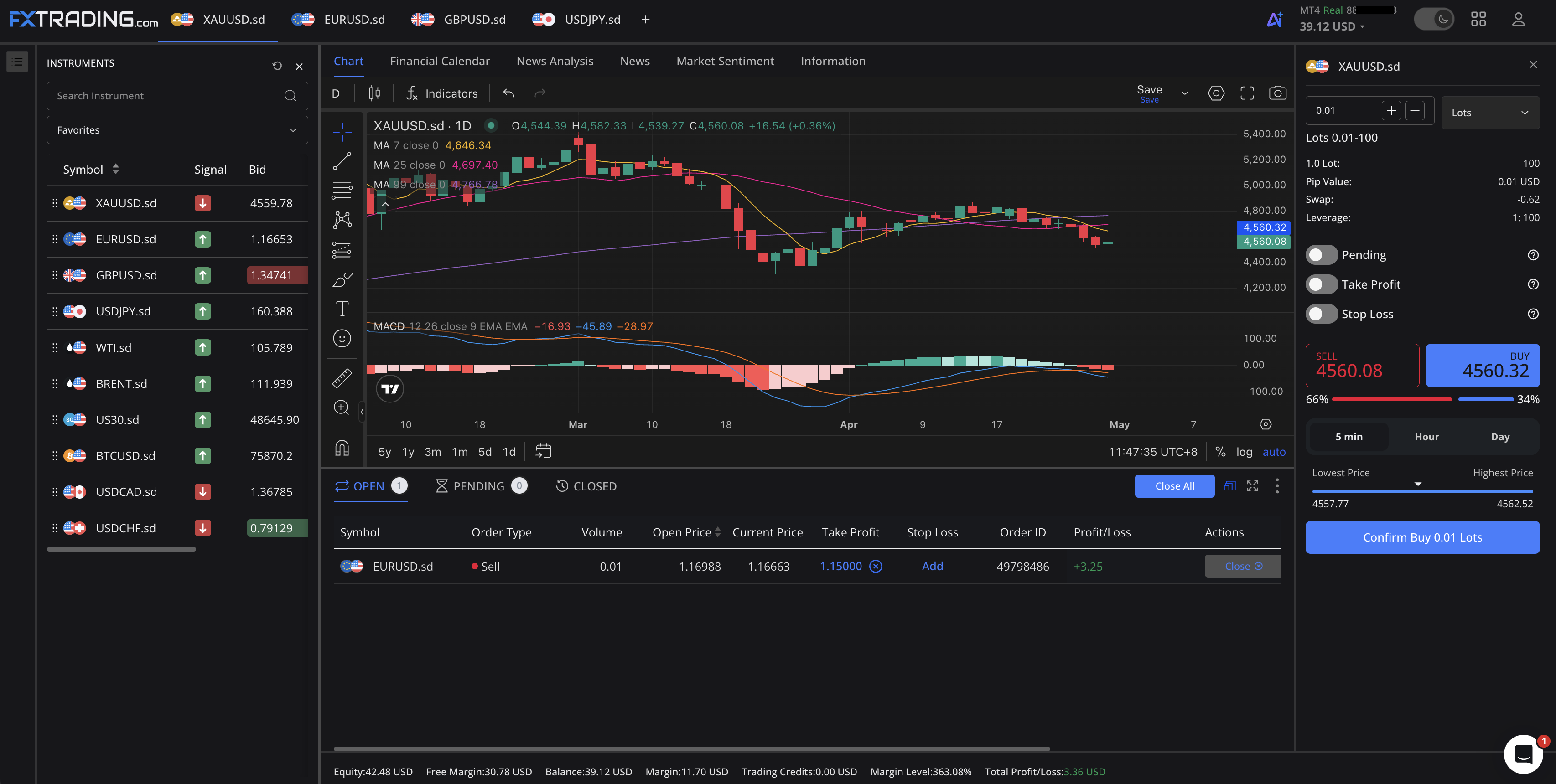
The FX platform is the software interface you interact with every day. It is the digital dashboard where you view live price charts, apply technical indicators, and manage your open positions.
It’s the cockpit of an aeroplane. It provides you with all the dials and levers you need to navigate, but it isn’t the engine that makes the plane fly.
A good platform needs to be intuitive. The interface should be navigable, not clunky.
It should also be stable. If the software freezes while you are trying to exit a fast-moving trade, you might not be able to reap the optimal profit.
Platforms can be downloaded as standalone software for your computer, accessed via a web browser, or used as an app on your mobile device. Their primary job is data visualisation and order entry.
Broker
The broker is the financial institution that operates behind the scenes. When you open an account with a broker, you are depositing your money with the broker, not the software. Brokers act as the intermediary between you and the interbank market where currencies are actually swapped.
The broker provides the liquidity, determines the spreads you pay, and sets the rules for leverage and margin.
The broker also determines what currency pairs you have access to, as well as if you should pay any withdrawal fees.
While the platform is about the user experience, the broker is about the financial foundation. The broker is the entity that must be regulated by financial authorities to ensure they are treating you fairly.
This means that you can have FXTrading.com as your broker, for example, then MT4 could be your trading platform. You can trade through FXTrading.com from the MT4 platform. However, if you don’t have a broker, you can’t trade, even if you have access to MT4.
Some FX Trading Solutions are Both Trading Platforms and Brokers for a Unified Program
For a long time, the industry standard was to use a third-party platform like MetaTrader connected to a separate brokerage account. This works, but it can sometimes feel fragmented. You have to manage logins for the software and separate logins for the broker’s client portal.
However, some FX trading solutions act as both the trading platform and the broker, for a more unified solution.
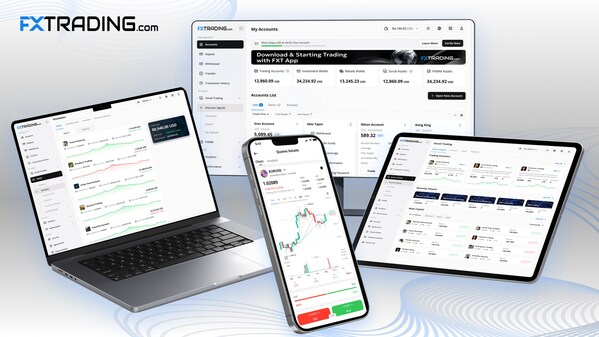
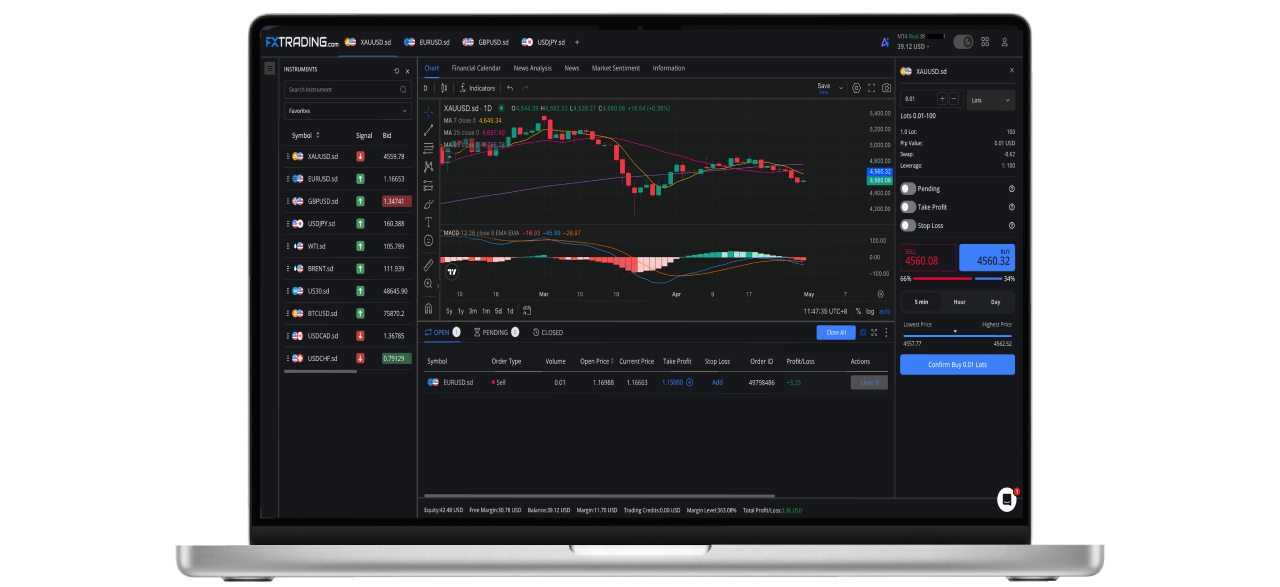
Here at FXTRADING.com, we operate as both the broker and the platform provider. Traders can use our mobile app to begin trading with no need for separate accounts or additional apps. You can log in directly to our web-based platform and start trading immediately. For those who prefer, MT4 and MT5 are also fully supported.
This streamlined approach is designed to remove friction from your daily routine.
What You Should Look For in an FX Trading Platform
Not every FX platform is built the same way. When you are evaluating where to put your money, you should look for these key factors, as they are indicators of a reliable service.
Company Reputation
The Forex space is riddled with gurus and course peddlers. As such, company reputation, be it an FX trading platform or online course, should be approached with caution.
You should always look at the history and the regulatory standing of the company you are trusting. Look for companies that have been in the market for several years.
Check which authorities oversee the FX trading platform. Regulation isn’t just a box-ticking exercise; it involves oversight of how your funds are handled and how trades are executed.
You should also look for reviews from other traders. People are quick to share their experiences when things go wrong, so a long track record of satisfied users is a positive sign.
Trading Community
A vibrant trading community around a platform can be an enormous asset. When a lot of people use the same software, it creates an ecosystem of shared knowledge.
You can find custom indicators, automated scripts, and troubleshooting tips easily online. If you are using a very obscure platform, you might find yourself alone when you have a question.
We encourage social interaction and the sharing of ideas. When you see what other traders are doing, it can provide context for your own strategies. Some platforms even offer copy trading—a form of social trading that allows you to replicate the trades of more experienced investors.
To assess the trading community around a platform, perform a search for that platform on Facebook, Instagram, LinkedIn, and YouTube. If there is plenty of user-generated content, that suggests that the platform’s community is thriving. You can expect community help when you face some issues.
This community aspect makes the trading experience less isolating.
Available Currency Pairs
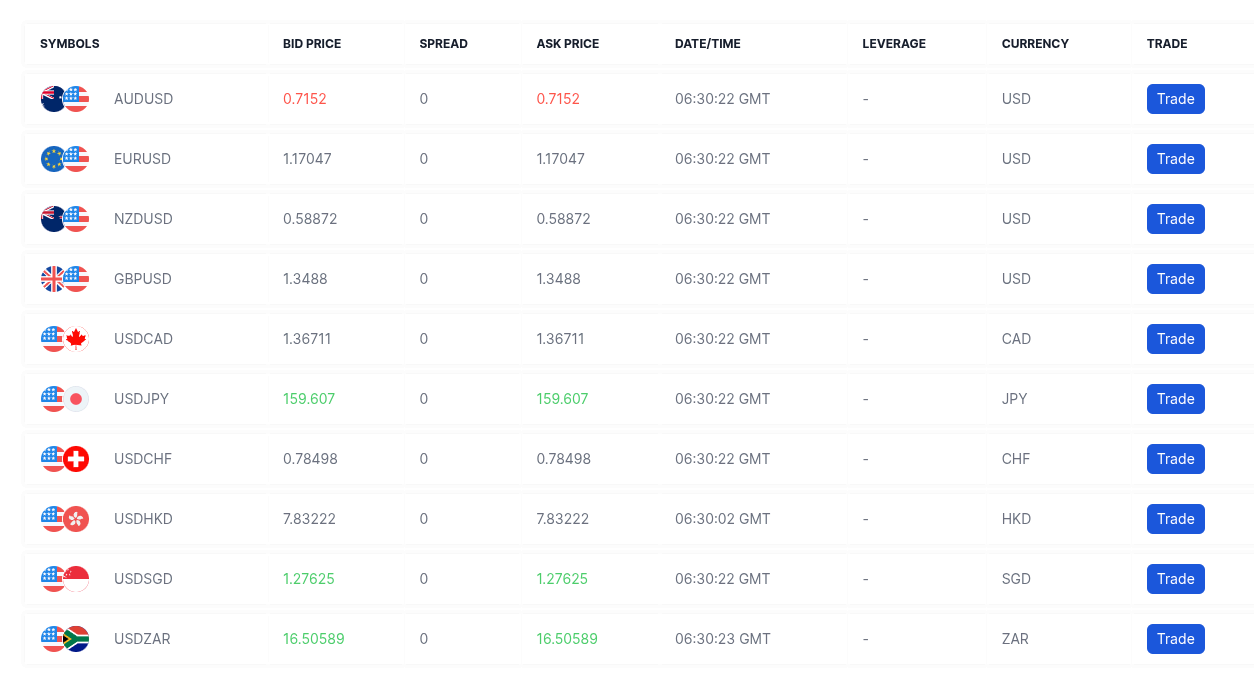
The variety of currency pairs available is technically a broker provision, but when the platform and broker are integrated, it becomes a core feature of the software experience.
You want a platform that gives you access to more than just the Majors like EUR/USD or GBP/USD.
Some opportunities can arise in Minors, which are major currency pairs that don’t include the US Dollar, such as EUR/GBP; or Exotics, which consist of one major currency and one emerging economy, such as USD/ZAR.
Having a wide selection means you don’t have to go looking for another broker when the major pairs are stagnant. A good platform/broker will provide access to these different markets, including commodities or indices, so you can diversify your activity from a single interface.
Allowed Leverage
Leverage is a powerful tool that allows you to control a large position with a relatively small amount of capital. Like currency pairs, this is a broker-level setting. But if you’re looking for integrated broker-platform solutions, you ought to consider the allowed leverage.
Think of leverage as a financial booster provided by your broker platform. It allows you to trade much larger amounts of currency than you actually have in your account. When you use leverage, you are only required to put down a small percentage of the total trade value.
For example, if your broker offers 1:50 leverage, you can control a position worth $50,000 with only need $1,000 in your account.
Having this option will provide you with more flexibility and strategy options for Forex trading.
Accessibility
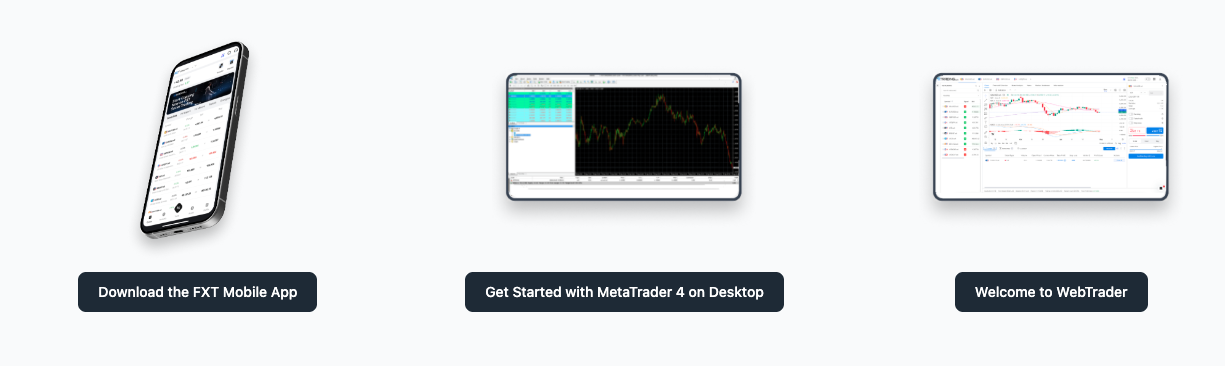
Your trading shouldn’t be tethered to a single desk. The modern market moves 24 hours a day, five days a week, and you might need to check your positions while you are away from your main computer. A reliable FX platform must be accessible across multiple devices.
An ideal FX trading platform will be accessible through a desktop application, a web browser, and a mobile app.
If you open a trade on your PC, you should be able to see it and modify it on your phone as well.
The mobile experience should not be a stripped-down, useless version of the desktop software. It needs to have functional charting and quick execution buttons, so that you’ll still be able to perform trades even while you’re out and about—away from your desk.
Program Snappiness
There is nothing more frustrating than a sluggish program. Some trading platforms are built on inefficient code that hogs your computer’s RAM and causes your system to lag.
If the software takes two seconds to respond to a click, the price might have moved against you by several pips.
You want a program that feels snappy. It should load quickly, charts should scroll smoothly, and orders should be processed immediately. Also, a snappy program feels much more like a breeze, and that immediate feedback makes trading more enjoyable.
Program Features
While you want a fast platform, you also want one that is feature-rich.
You should look for tools that give you an edge or make your life easier. This includes things like:
- Built-in trading charts
- Drawing tools for technical analysis
- Wide variety of indicators.
- Paper trading so you can test your ideas in a risk-free environment using live market data.
- Trading bots or automated scripts.
- Social or Copy Trading
- Funds Management
The goal is to have everything you need in one place so you don’t have to keep switching between different websites or apps. Also, this integration reduces reliance on third-party features, making trading less resource-intensive on compute power.
Trading Protection
A reliable platform must have robust protection for both your data and your funds.
- This starts with basic things like two-factor authentication (2FA) to prevent unauthorised access to your account.
- Beyond digital security, there is financial protection. You should check if the platform offers negative balance protection, which prevents you from losing more money than you have in your account.
- Also, ensure that client funds are kept in segregated bank accounts, separate from the platform-broker’s operating capital. This means your money is protected even in the unlikely event of financial trouble for the firm.
These layers of security are what turn a simple software tool into a reliable financial environment.
Popular FX Trading Platforms Beginners Can Use
If you are just starting, you will likely encounter a few names over and over again. These popular FX trading platforms are excellent for beginners, and can still find tremendous use even after you’ve gained some experience.
MT4 and MT5
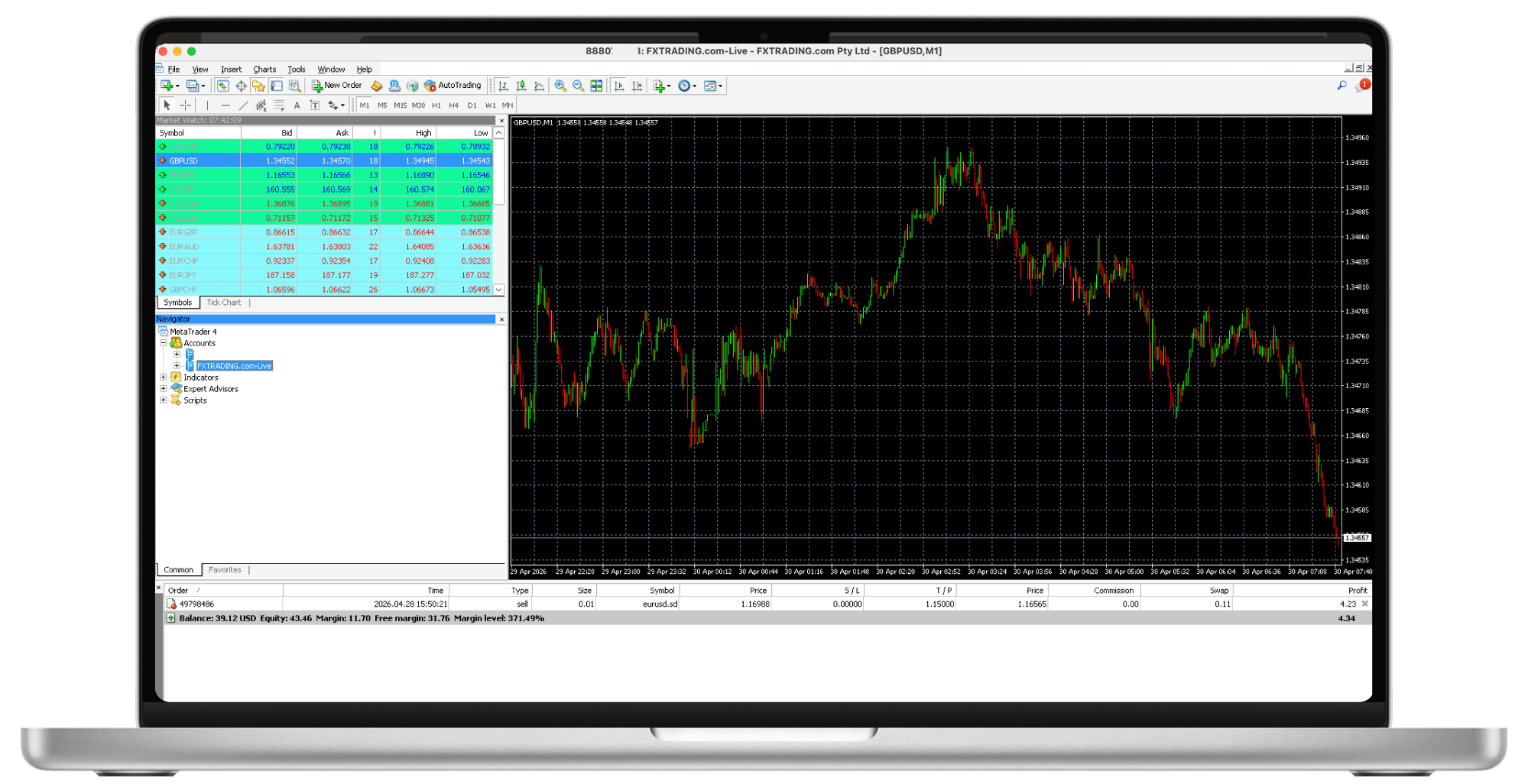
MetaTrader 4 (MT4) and MetaTrader 5 (MT5) are the most famous names in the industry. They have been around for a long time and have a massive user base.
MT4 is primarily focused on Forex, while MT5 was built to handle more asset classes like stocks and futures.
The main advantage of these platforms is the community. Because of MetaTrader’s mainstream use, there are thousands of free and paid indicators and resources available to users.
However, the interface can feel a bit dated to some users. It looks like software from the early 2000s, and it can take some time to learn how to configure everything correctly. They also don’t have the snappiest app, which you’ll really feel if you’re not using a flagship phone.
FXTRADING.com
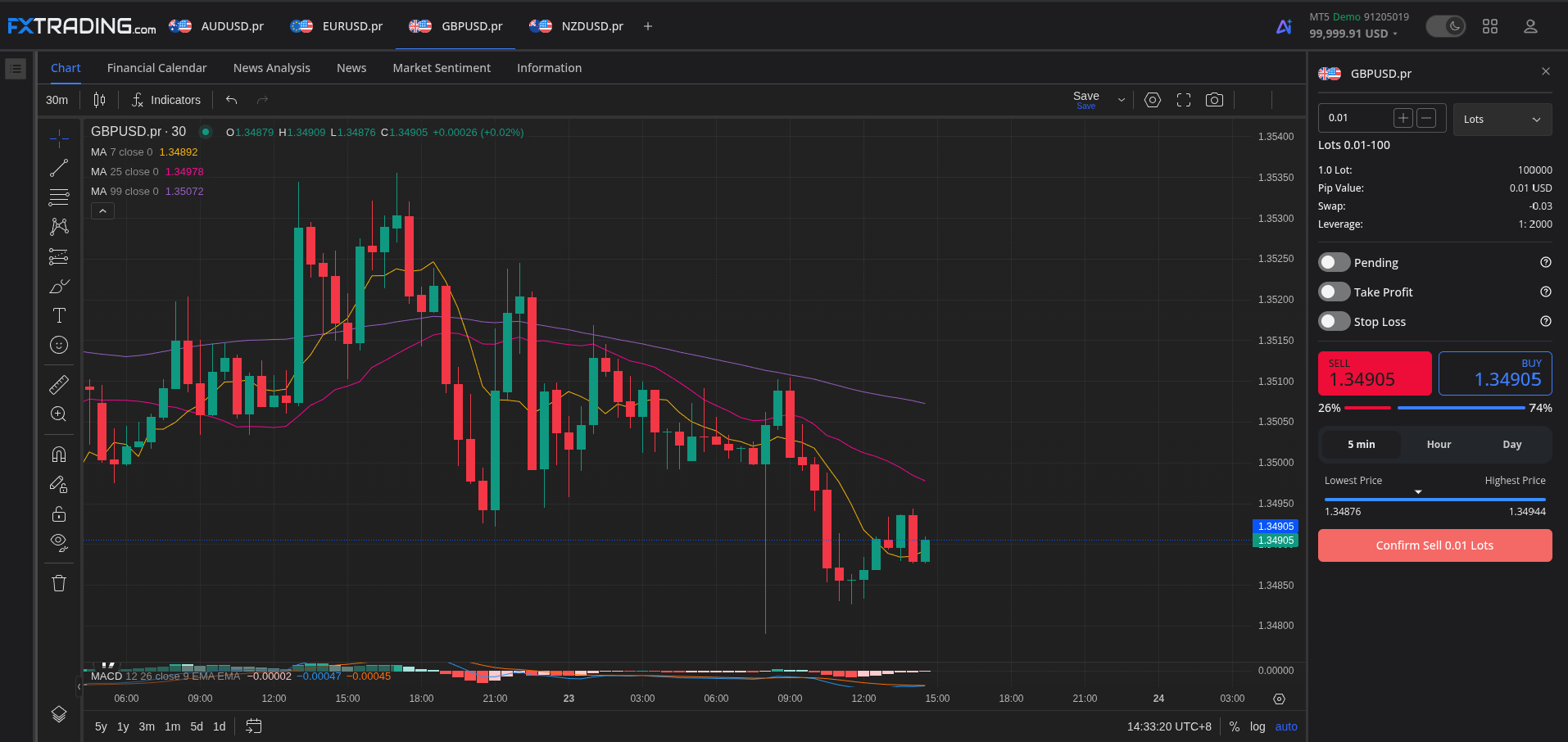
FXTRADING.com is the best option for beginners to get started with Forex trading.
It provides access to over 500 financial instruments—including Forex, stocks, indices and commodities—through the globally recognised MetaTrader 4 (MT4) and MetaTrader 5 (MT5) platforms.
Alternatively, FXTRADING.com’s entire functionality can be accessed through the FXT WebTrader, which is a browser-based solution, while the FXTRADING.com Mobile App allows for full account management on the go.
The platform is particularly beginner-friendly due to its Standard Account, which features a low minimum deposit of $50, zero commission fees, and the ability to trade in micro lots (0.01).
FXT also offers a dedicated Social Trading environment where new traders can browse a marketplace of signal providers, view their audited performance history and risk ratings and automatically copy their strategies in real-time.
To ensure a secure experience, FXT holds client funds in segregated accounts with Tier-1 banks (like National Australia Bank) and provides negative balance protection so you cannot lose more than your initial deposit.
FXTRADING.com is the trading name of Gleneagle Securities (AUST) Pty Limited and operates under an Australian Financial Services Licence AFSL 337985 held by Gleneagle Securities (AUST) Pty Limited. It is also licensed in Vanuatu by the Vanuatu Financial Services Commission with Securities Dealers Licence No. 40256.
We focus on speed and ease of use. Our interface is designed to be intuitive, so you can easily find your way around. Because we control the entire ecosystem, we can ensure that the execution speed is as fast as possible.
TradingView
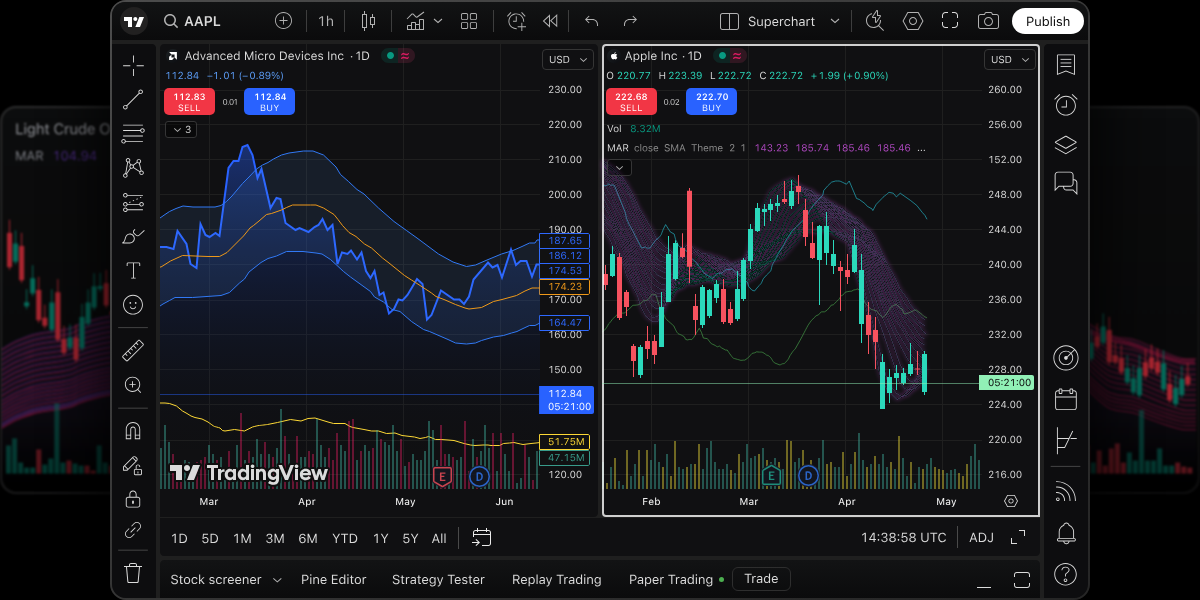
TradingView is a charting platform and social network used by over 50 million traders worldwide.
While it is not a direct broker, it is a primary tool for market analysis that integrates seamlessly with many major Forex brokers (such as OANDA and FOREX.com), allowing you to execute trades directly from your charts.
It is highly accessible for beginners, offering a Free (Basic) Plan that includes most essential features, such as real-time global market data and a library of over 100,000 community-built indicators.
One of TradingView’s most valuable features for newcomers is Paper Trading, a built-in simulator that lets you practice strategies in real-time without risking actual money. The platform is also famous for its social aspect; you can follow experienced traders and view their “Ideas” (annotated charts with predictions).
Because it is cloud-based, your watchlists and chart layouts sync automatically across their web platform, desktop app, and mobile app, ensuring you can monitor the markets from anywhere.
While it is excellent for analysis, you often have to connect it to a broker to actually execute trades. Some people use TradingView for their research and then go to another platform to pull the trigger.
cTrader
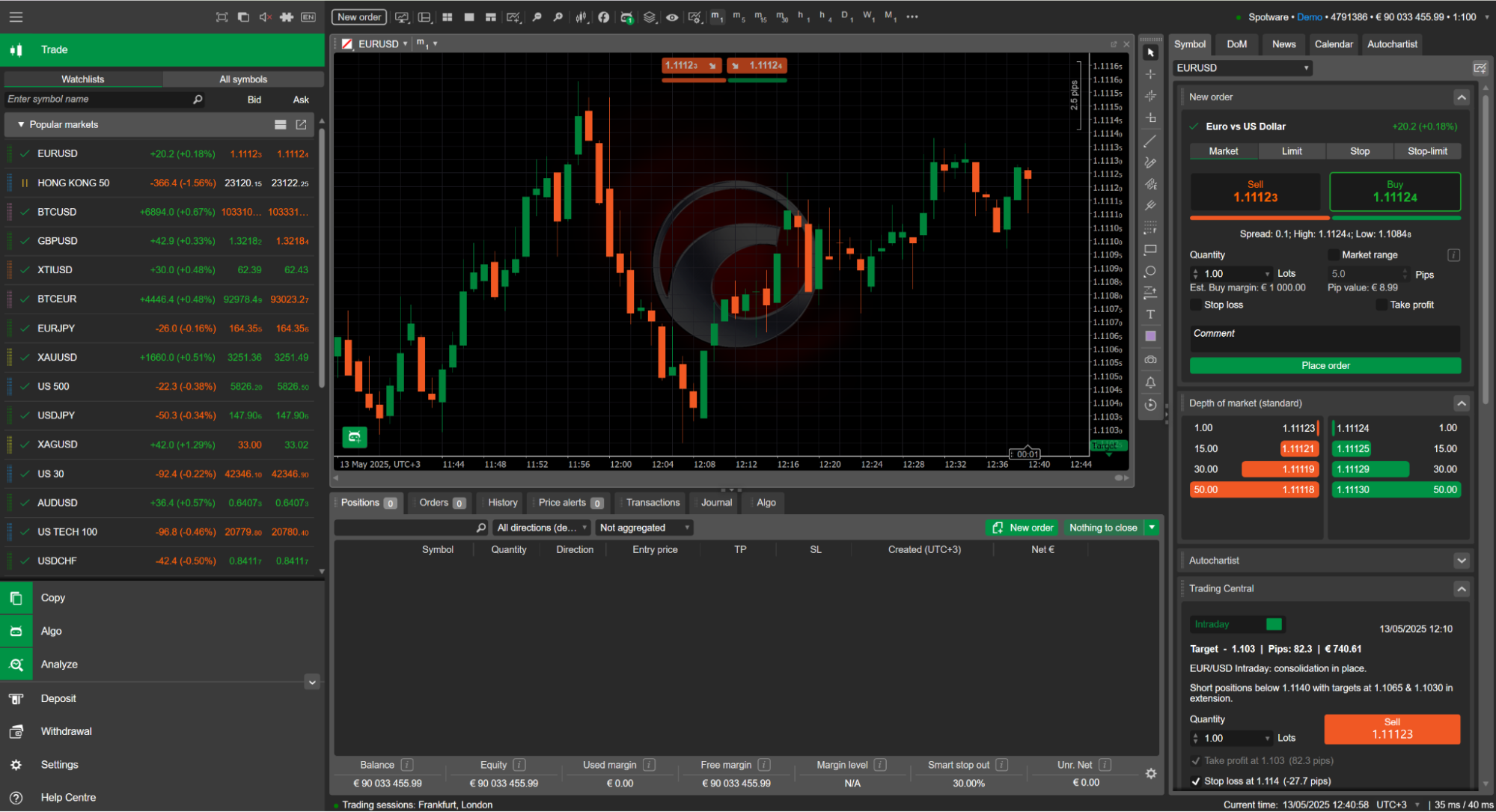
cTrader is a premium multi-asset trading platform. It is available across cTrader Desktop, cTrader Web, and cTrader Mobile (iOS and Android), ensuring beginners can manage their accounts from any device.
The platform is often praised for its intuitive design, which many newcomers find easier to navigate than traditional trading software.
One of its standout features for beginners is cTrader Copy, a versatile tool that allows users to follow and automatically replicate the trades of experienced strategy providers.
Additionally, cTrader provides built-in Trade Analysis tools, which offer detailed statistics on your personal trading history, helping you identify your strengths and weaknesses as you learn.
The platform also supports QuickTrade for one-click execution. On the flip side, it also offers a wide array of advanced charting tools and indicators that are accessible even for those just starting out.
cTrader also has a dedicated platform for automated trading called cTrader Automate.
While it is very powerful, it might have a slightly steeper learning curve for someone who has never seen a trading screen before. It is a sophisticated tool for those who want a bit more detail in their market data.
Leverage FXTRADING.com Today for Clutter-Free Trading
You deserve a trading experience that doesn’t get in your way. Many platforms fill your screen with useless widgets and confusing menus that only serve to distract you from the charts. We believe that a reliable FX platform should be powerful yet simple. Our goal is to provide you with the most direct route to the global markets.
When you trade with us, you are using a system designed for performance. We have stripped away the unnecessary complexity to give you a layout that is easy to navigate and fast to respond. You get the benefits of a regulated broker combined with the convenience of a modern, integrated platform. We invite you to see how much more focused your trading can be when you aren’t fighting with your software. Open an account with us and experience a trading environment that puts your needs first.
Frequently Asked Questions
Does a faster internet connection improve my trading “snappiness”?
While a platform’s code efficiency is crucial, your local internet speed and latency also affect how quickly your orders reach the broker’s server.
Can I use the same MT4 account on two different platforms simultaneously?
Yes, you can generally log into your brokerage account on a desktop platform and a mobile app at the same time to monitor trades on the go.
What happens to my open trades if my platform crashes or my computer restarts?
Your trades are held on the broker’s server, so they remain open even if your software is closed; however, you won’t be able to manage them until you log back in.
Are “automated scripts” and “trading bots” the same thing?
Scripts are usually single-use actions (like closing all open orders), whereas trading bots are programs that automatically open and close trades based on a set strategy.