Best Forex Broker in Singapore for High Leverage and Low Fees (2026 Guide)


A Forex Broker is the financial engine that makes your trades possible. They are the institution holding your money and connecting you to the global market. Because individual traders don’t have millions of dollars to trade directly with central banks, a broker acts as the essential middleman.
However, while a broker can give you access to currency pairs and leverage that can lead you to find success in Forex trading, there are also plenty of Forex brokers to choose from.
We have put together this guide to show you how to navigate these choices.
Key Takeaways
- A Forex broker provides the financial liquidity and market access, while the trading platform serves as the software interface for analysing charts and placing orders.
- Trading costs are primarily composed of the spread (buy/sell difference), flat-fee commissions per lot, and potential withdrawal fees.
- While the Monetary Authority of Singapore (MAS) caps retail leverage at 50:1, many traders utilise global brokers to access higher ratios up to 2000:1.
- Leading brokers for 2026 include specialised options like FXTRADING.com for high leverage, as well as MAS-regulated firms like CMC Markets and OANDA.
- Other broker features to prioritise in addition to leverage include negative balance protection, fast execution speeds to prevent slippage, and a wide variety of currency pairs.
Clarification: Broker vs. Trading Platform
Before you put your money on the line, you must understand the difference between the broker and the trading platform. Many people use these terms as synonyms, but they perform different roles in your trading day.
The broker is the financial institution that holds your funds. We act as your gateway to the global markets, handling the execution of your trades and ensuring your capital is managed. Without a broker, you simply cannot access the interbank market where currencies are traded.
The trading platform is the software you use to interact with the market. It is the interface where you view charts, use technical indicators, and click the buy or sell buttons.
Some brokers provide their own proprietary platforms, while others are accessible through third-party platforms such as MetaTrader 4 or MetaTrader 5.
What to Look For in a Forex Broker
When you are scanning the market for a place to trade, you should focus on the factors that directly impact your bottom line. Here are some of the first things you should inspect when deciding on a Forex broker:
Low Fees
There are a handful of fees that come with trading with your broker. These include the following:
First, there’s the spread. This is the difference between the price you pay to buy a currency and the price you receive when you sell it. In simple terms, it is the transaction fee you pay to your broker for every trade you make. Think of it exactly like an airport currency exchange booth. They might sell you Euros for 1.15 USD. But if you immediately try to sell those Euros back to them, they will only buy them from you for 1.10 USD. That $0.05 difference is the spread, and it’s how the broker makes their profit.
This is a variable commission. So, let’s say a spread is 0.2 pips. If you’re trading a micro lot, this 0.2 pip spread might directly translate to a “transaction cost” of $0.02 each trade.
Some charge a flat fee per lot traded. Unlike a spread, which is built into the price and fluctuates based on market conditions, this fee is separate, transparent, and stays the same regardless of how volatile the market is.
Then there are withdrawal fees. This is what you pay if you wish to withdraw your money from your trading account to your bank account.
Allowed Leverage
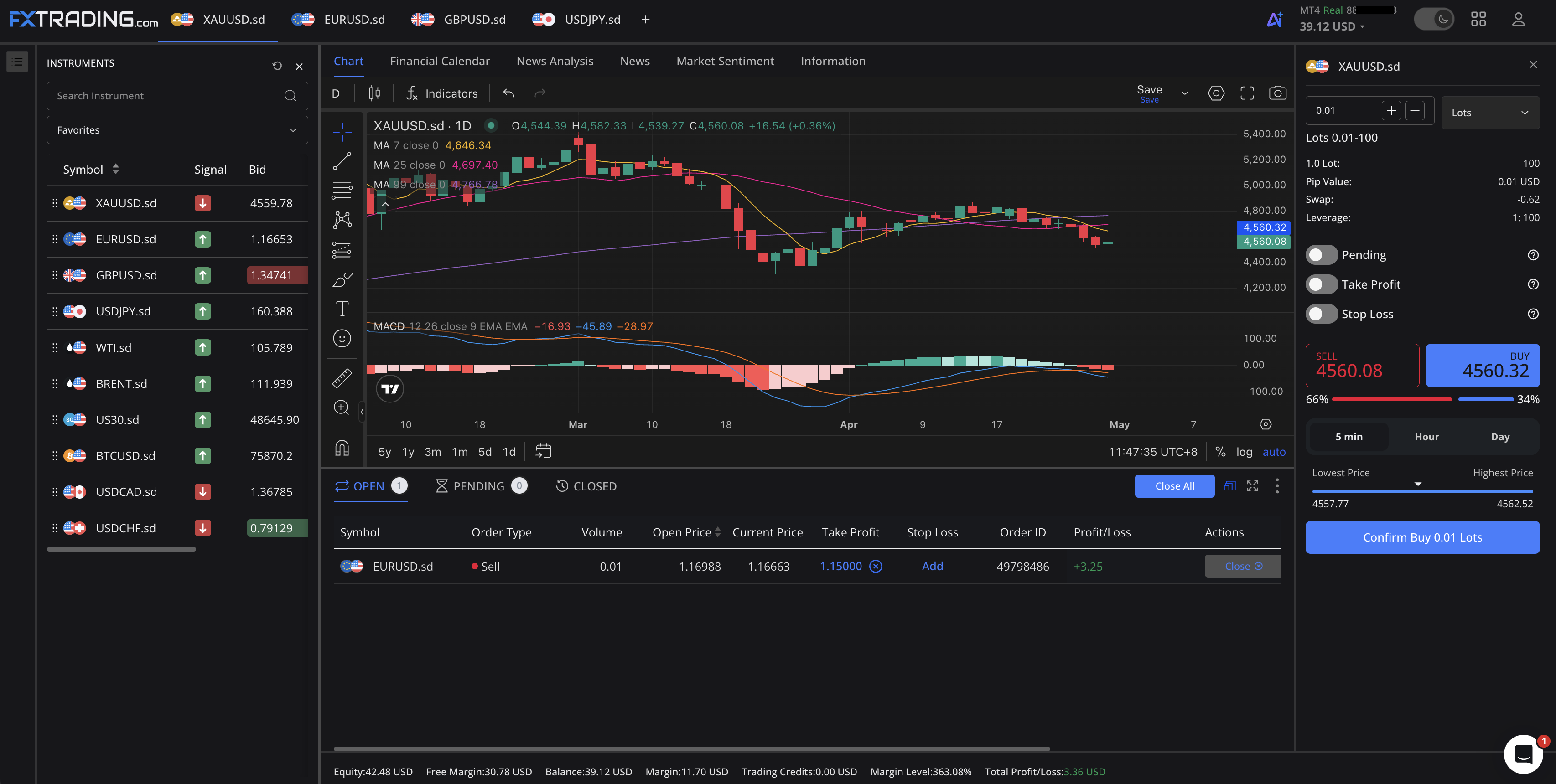
Leverage is the tool that allows you to control a large position with a small amount of capital. It is what makes the forex market accessible to retail traders.
If you have $1,000 and use 50:1 leverage, you are effectively trading with $50,000 in the market. This amplifies your gains, but you must be aware that it also amplifies your losses.
This might be easier explained through a chart.
| Trader A (No Leverage) | Trader B (1:50 Leverage) | |
| Leverage Ratio | 1:1 | 1:50 |
| Capital Required (Margin) | $110,000 | $2,200 |
| Notional Position Value | $110,000 | $110,000 |
If the EUR/USD rises by 1%, the position is now worth $111,100. Your profit is $1,100. However, the ROI for both traders are very different.
Trader A made $1,100 on a $110,000 investment. Their Return on Investment (ROI) is 1%.
However, since Trader B had a 1:50 leverage, they were able to secure a $110,000 position with just $2,200. As such, Trader B, though only having $2,200, reaped the same profit as Trader A. They made $1,100 on a $2,200 margin. Their ROI is 50%.
Note, however, that just as leverage can give traders access to scalps and profits they wouldn’t otherwise be able to gain, the same applies to how much they could lose. Trader B could blow out their entire account if the market just moves 2% against their favour.
You want enough leverage to execute your strategy without needing to deposit huge sums of money. The kind of leverage you’ll have access to will depend on the options your broker provides.
However, you should also look for brokers that allow you to adjust your leverage. You might want 50:1 for a quick scalp on a major pair, but perhaps you prefer 20:1 for a longer-term swing trade.
Monetary Authority of Singapore’s 50:1 Leverage Hard Cap
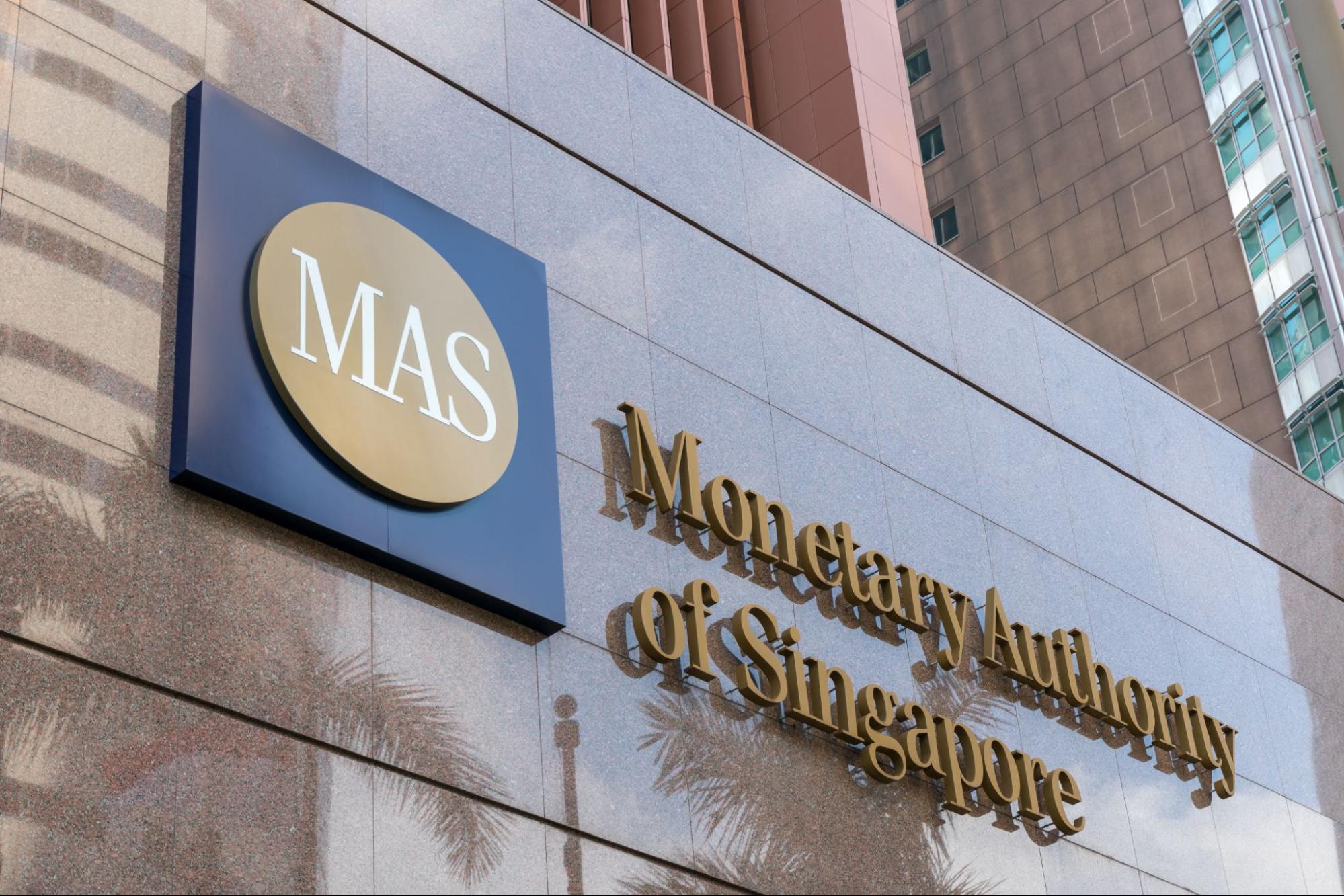
If you are trading through a broker that is directly licensed and regulated by the Monetary Authority of Singapore (MAS), you will encounter a hard cap on leverage.
For retail traders, this cap is 50:1. MAS put this in place to protect you from the volatility of the markets, ensuring that a small price swing doesn’t wipe out your entire account instantly.
However, many experienced traders find 50:1 to be too restrictive. To get around this, some traders trade with global brokers. While we respect all local regulations, many traders choose to open accounts with international branches that operate under different jurisdictions, such as Australian Financial Services Licence in Australia or other global licences.
This allows you to access leverage up to 500:1 or even 2000:1, depending on the entity.
You must decide if the protection of a local MAS licence is more important to you than the flexibility of higher leverage offered by global entities.
Best Forex Broker in Singapore for High Leverage and Low Fees
Now that you know what to look for, let’s look at the top contenders for 2026. All of these options are available to Singapore traders.
FXTRADING.com
We believe we offer the most competitive environment for Singaporean traders who want to push their limits.
If you trade with our global entity, you can access leverage up to 2000:1 on certain account types. This is significantly higher than what you will find with local-only firms, which are capped at 50:1 due to MAS regulations.
When it comes to fees, we have built our reputation on transparency.
The minimum deposit for our platform is $50. With that, you get zero commission fees and a spread of 0.2 pips. You may also opt for our Professional accounts, which offer zero spread but a fixed commission per lot traded.
We don’t charge for deposits and we make the withdrawal process as fast as possible because we know you want access to your profits. You can manage your account in multiple currencies, which helps you avoid unnecessary conversion fees when moving money back to your Singaporean bank account.
CMC Markets
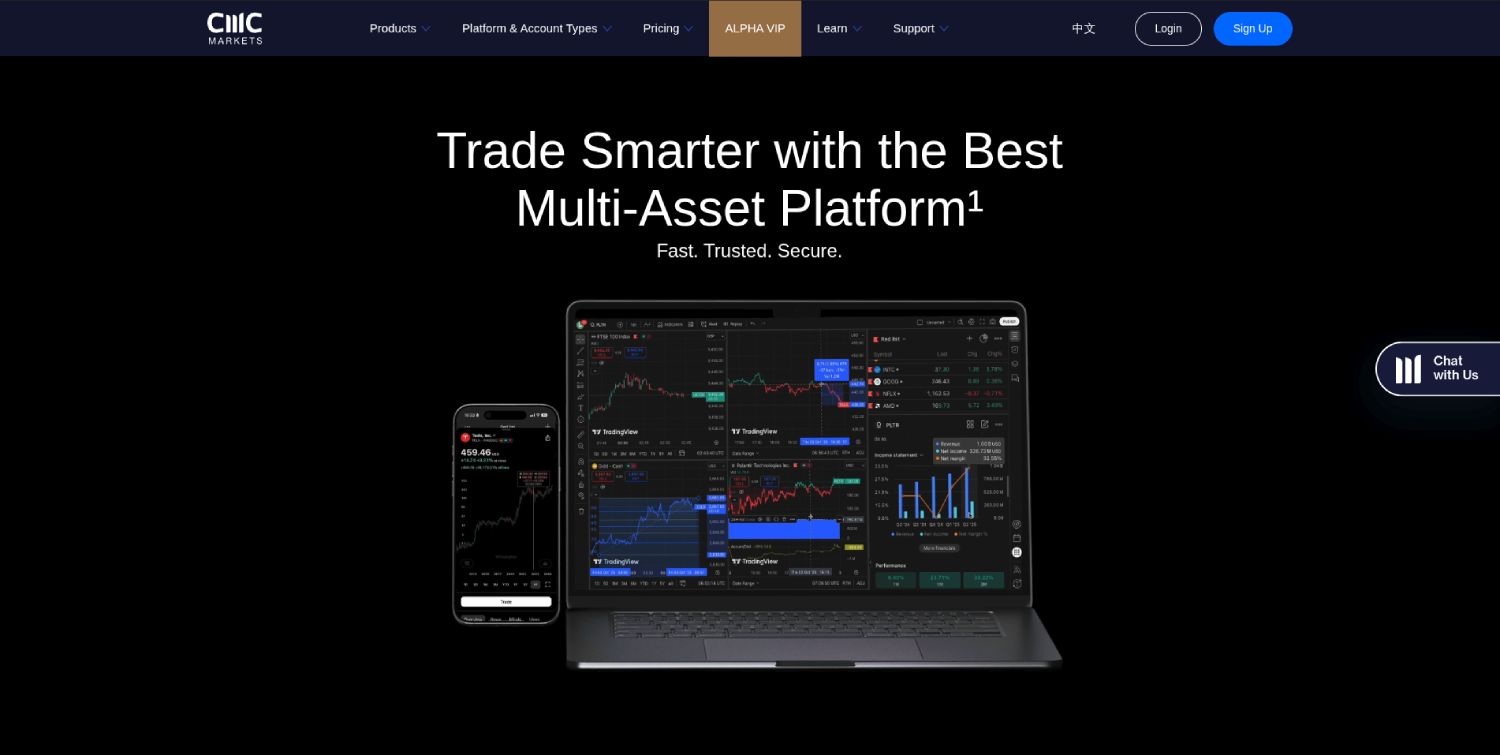
CMC Markets is a long-standing name in the Singaporean scene. They are MAS-regulated, which means if you are a retail trader, you are looking at that 50:1 leverage limit.
It is particularly noted for offering one of the most extensive selections of currency pairs in the industry, with access to over 330 forex pairs on its proprietary Next Generation platform. This platform is designed for high-performance trading, featuring low-latency charting with over 115 technical indicators.
Their platform also has a “Client Sentiment” tool that shows the position of other CMC traders in real-time.
For those concerned about costs, CMC Markets offers highly competitive spreads starting at 0.5 pips on major pairs like EUR/USD, with zero commissions on forex trades.
To ensure fund security, client money is held in segregated accounts with Tier-1 banks, and the broker provides negative balance protection to prevent retail clients from losing more than their account balance.
FOREX.com
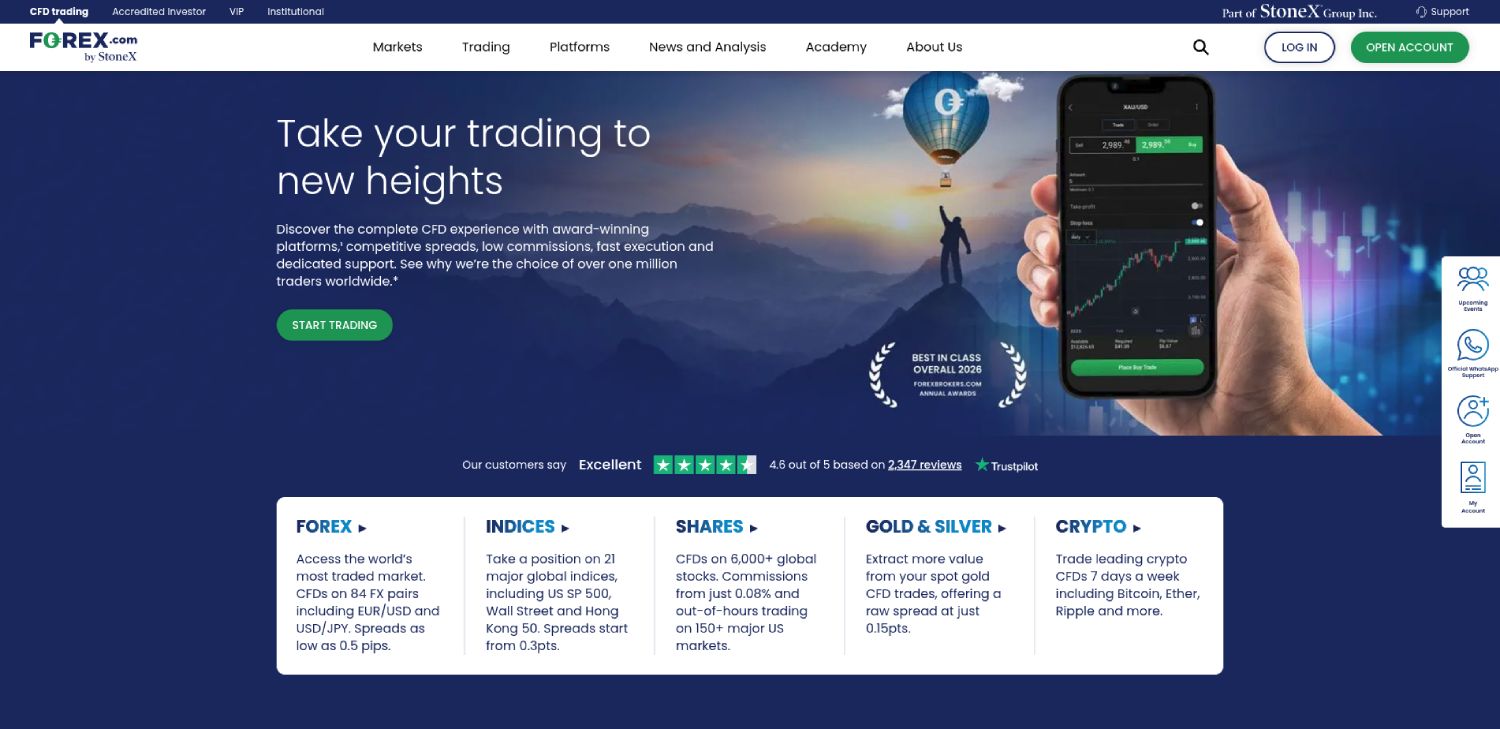
FOREX.com is another giant that has a strong presence in the region.
They are operated by GAIN Capital Singapore Pte. Ltd., which is regulated by the Monetary Authority of Singapore (MAS). It offers a robust selection of over 80 currency pairs, ranging from majors to exotics.
Traders can choose between several high-performance platforms, including their proprietary FOREX.com Web Trader, their dedicated mobile app, and full support for MetaTrader 4 (MT4).
Additionally, the broker features seamless integration with TradingView.
Pricing is tailored to different trading styles through two primary account types:
The Standard Account, which offers competitive spreads starting from 0.8 pips on major pairs like EUR/USD, and
The RAW Pricing account provides ultra-tight spreads from 0.0 pips and a flat commission of $7 per $100k traded.
As a MAS-regulated broker, FOREX.com provides leverage of up to 50:1 for major currency pairs.
Beginners can also benefit from unique tools like SMART Signals, which use automated algorithms to highlight potential trade opportunities, and Performance Analytics, a personalised dashboard that helps traders identify their behavioural biases and improve their decision-making.
OANDA Singapore
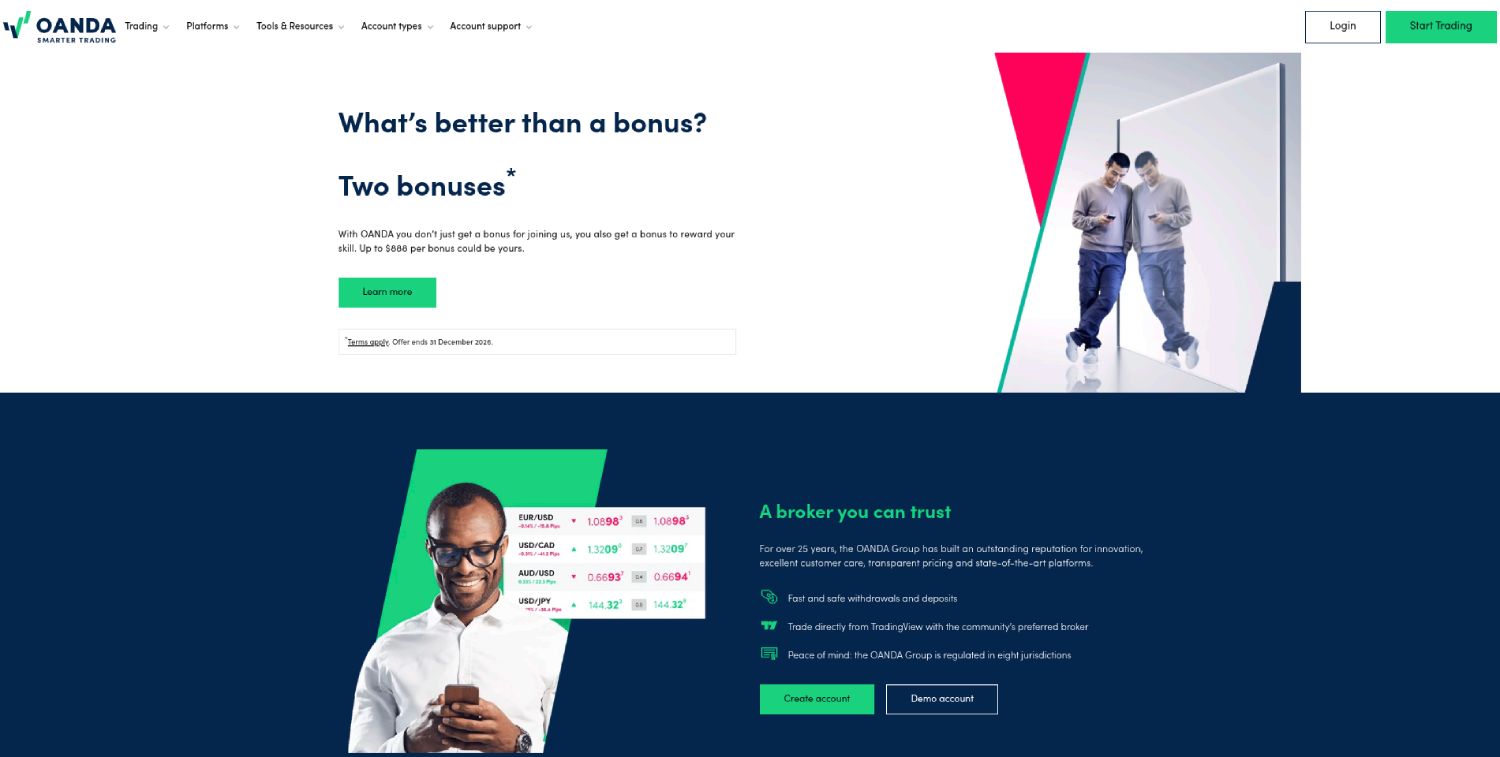
OANDA is a globally recognised broker regulated by the Monetary Authority of Singapore (MAS) and holds a Capital Markets Services License.
It offers access to over 70 currency pairs through its proprietary OANDA Trade platform—available on web, desktop, and mobile—as well as through MetaTrader 4 (MT4) and direct integration with TradingView.
This allows traders to execute orders using OANDA’s pricing while utilising the charting tools they are most comfortable with.
Traders can choose between two transparent pricing models:
- The Spread-only account, which features no commissions and spreads starting from 0.6 pips, and
- The Core Pricing account, which offers raw spreads starting from 0.0 pips plus a flat commission of US$5 per US$100,000 traded.
In accordance with MAS requirements, OANDA provides retail leverage of up to 50:1 for major currency pairs.
OANDA is known for its no minimum deposit policy. You can trade any position size, even down to a single unit of currency. This makes trading highly accessible for beginners and those with little capital.
eToro Singapore
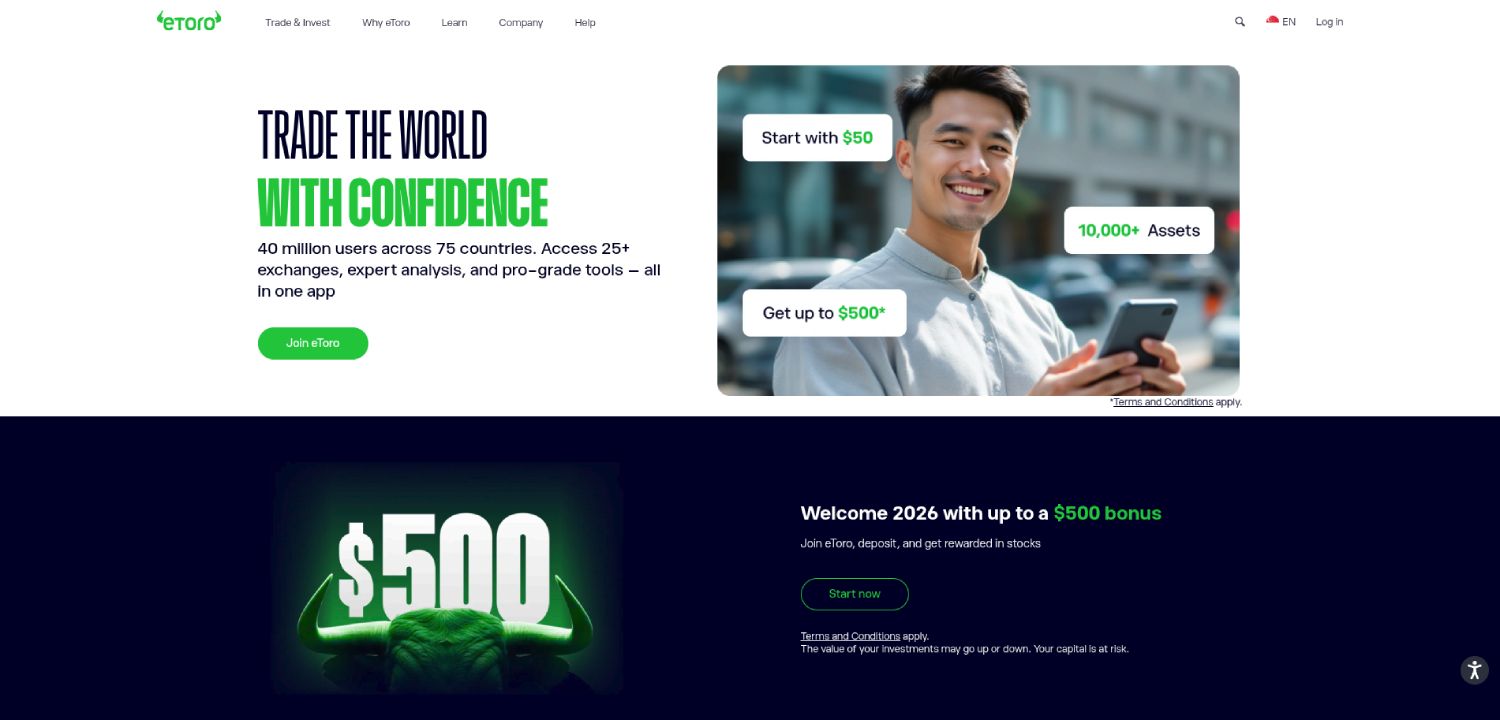
eToro is the go-to for social and copy trading. If you want to follow what other people are doing, this is the place.
They are regulated by the Monetary Authority of Singapore (MAS). In compliance with MAS retail regulations, leverage is capped at 50:1 for major currency pairs.
The platform is widely recognised for its social and copy trading features, allowing users to replicate the trades of top-performing investors through the CopyTrader system. This system allows novice traders to copy the trades of more seasoned ones, making eToro one of the more accessible options for beginners.
Beyond forex, eToro offers a multi-asset environment that includes commodities and indices, as well as zero-commission trading in real stocks and ETFs.
For forex traders, eToro charges a spread on major pairs like EUR/USD, typically starting at around 0.2 pips.
The platform is accessible via a user-friendly web interface and mobile app. Account management includes a 5 USD withdrawal fee (with a 30 USD minimum withdrawal) and a 10 USD monthly inactivity fee after 12 months of inactivity.
Beginners can start with a minimum first deposit of 50 USD, making it one of the most accessible entry points for new traders in Singapore.
Other Things to Look For in Singapore Brokers Apart from Leverage
Leverage and fees are your primary concerns, but they shouldn’t be your only deciding factors. Once you have narrowed down your list, you need to look at the day-to-day experience of using the service.
Assess the following:
Availability of a Trading Platform or App
You aren’t always at your desk. You need to be able to check your positions or close a trade while you are on the MRT or grab a coffee.
Most brokers will integrate with MetaTrader. However, it also helps to see if the broker has their own platform or app with which you can trade. These platforms may provide features and benefits that you won’t get with MetaTrader or TradingView.
A good app should give you full functionality. You need to see live charts, apply indicators, manage your orders, and see your account history. Having your broker and platform in one integrated solution minimises the number of accounts you have to make, and reduces the need to switch between apps.
Execution Speed
Speed is everything in forex. If there is a lag between you clicking “buy” and the order reaching the server, the price might have moved. This is called slippage, and it can reduce your trading yield.
You want a broker that has servers located close to the major liquidity hubs. Low latency means you get the price you see on the screen, which is vital when you are trading with high leverage.
It also helps if you yourself have a blazing-fast internet connection. Which shouldn’t be an issue in Singapore.
Negative Account Protection
This is a critical safety feature. When you trade with high leverage, it is possible for the market to move so fast that your account goes below zero in a few minutes.
Without Negative Account Protection, you could end up owing the broker money.
We provide this protection to ensure that you never lose more than you have deposited. It gives you the confidence to use leverage without fear of getting into debt. It is a safety net that every serious trader should insist on, especially when navigating volatile economic news or unexpected global events.
We still, however, advise using stop losses or being cautiously conservative when using high leverage. Even if your broker has negative account protection.
Available Currency Pairs
The Big Four majors (EUR/USD, USD/JPY, GBP/USD, and USD/CHF) are great. In fact, they might all be what beginners need.
But once traders have tabs on these four, they might want to explore beyond. Sometimes the best opportunities are in the minors or the exotics. You want a broker that offers a wide selection of pairs.
You should look for a list that includes the G10 currencies, as well as emerging market pairs like the SGD, HKD, and CNH.
We offer dozens of pairs, plus metals and oils, so you can diversify your trading whenever you see a setup.
Trade with FXTRADING.com Today!
Here at FXT, we offer a leverage of up to 1:2000, allowing you to trade with what little capital you have.
We offer you the speed, the low spreads and the massive leverage you need to take your trading to the next level.
You can open an account in minutes and start exploring the markets. Don’t let high fees or low leverage hold you back. Join us today and see why we are the preferred choice for those who want to trade their own way.
Frequently Asked Questions
Does using a global broker with 2000:1 leverage make my trades more expensive?
Not necessarily; leverage only changes how much capital you must hold as margin, while your trading costs (spreads and commissions) remain determined by your choice of broker, volatility, the currency pair you’re trading, and the account type you choose.
Is it safe to trade with a broker that is not regulated by MAS?
While you lose MAS-specific legal recourse, many global brokers are regulated by other “Tier-1” authorities like Australian Financial Services (Australia) or the FCA (UK), which maintain high standards for fund safety.
What is “slippage” and how does it happen during high-speed trading?
Slippage occurs when your order is executed at a different price than requested, typically during high volatility or when the broker’s execution speed is too slow to capture the live price.
Why does eToro charge a withdrawal fee while other brokers like FXTRADING.com do not?
Each broker has a different business model; eToro focuses on the social experience and offsets its lower commissions with fees on secondary actions, such as withdrawals or inactivity.
Does “Negative Balance Protection” apply if I use the maximum leverage of 2000:1?
Yes, at reputable brokers, this protection ensures that even extreme leverage cannot force your account balance below zero. Though be cautious with using extreme leverage, since you might blow out your account very quickly, nonetheless.